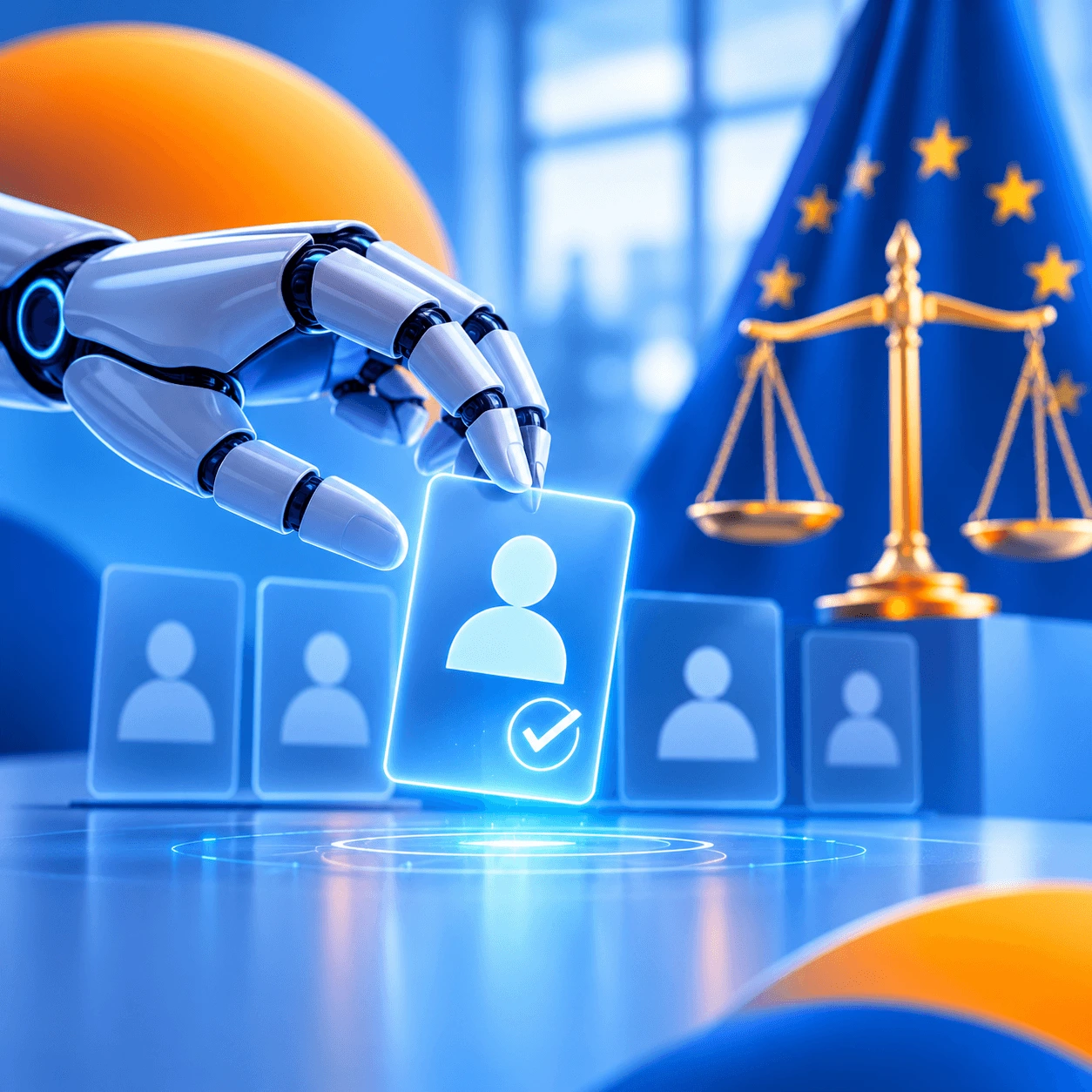
The EU pushed the high-risk rules for recruitment AI back to December 2027. Transparency rules apply now. Here is what that means for hiring teams and candidates.
The EU AI Act treats AI used to screen, rank or assess candidates as high-risk. Those obligations were due in August 2026, but the Digital Omnibus, in force since 27 July 2026, moved them to 2 December 2027. That gives employers more time. It does not give them a free pass.
This matters to anyone hiring in tech. Many teams already use AI for CV screening, sourcing or interview notes, often through tools bought by HR or added by individual recruiters. Candidates, meanwhile, increasingly want to know whether a person or a model looked at their application.
AI systems used for recruitment and selection fall under Annex III of the AI Act. That covers tools that filter CVs, rank candidates, analyse interviews or support decisions on promotion and termination. The responsibility sits largely with the organisation that deploys the tool, not only with the vendor.
What changed with the Digital Omnibus?
The Omnibus postponed the high-risk obligations for stand-alone systems, including recruitment tools, by 16 months to 2 December 2027. It also softened some rules. AI literacy is now a duty to support staff in building it, rather than to guarantee a set level. Simplified compliance, once reserved for SMEs, now extends to companies with fewer than 750 employees.
What already applies today?
Transparency rules did not move. Since 2 August 2026, people who interact with an AI system must be told so. In hiring, that covers recruitment chatbots, virtual assistants that answer candidate questions and AI-written messages. The enforcement framework applies from the same date, with fines that can reach €15 million or 3 percent of worldwide turnover for some breaches.
Our reading: the companies that will hire best in 2027 are the ones that treat this as a quality project, not a legal one. Practical steps:
- Map your tools. List every AI tool touching candidates, including the ones recruiters adopted on their own.
- Tell candidates. Say where AI is used in your process and where a person decides.
- Keep a human in the loop. Make sure someone with the right knowledge can explain and overrule a ranking.
- Test for bias. The Omnibus widens the legal basis for bias testing, which helps if you check outcomes per group.
What does this mean for tech candidates?
Expect more openness about how applications are handled, and ask about it if it is missing. A good recruiter can tell you which steps are automated and which are read by a person. For specialist roles, a keyword filter still misses strong profiles, which is one reason personal introductions keep working.
Frequently asked questions
When do the AI Act rules for recruitment tools apply? The high-risk obligations apply from 2 December 2027. Transparency obligations have applied since 2 August 2026.
Who is responsible, the employer or the software vendor? Both have duties, but the employer that deploys the tool is responsible for how it is used in its own hiring process.
Do I have to tell candidates that I use AI? Yes, when they interact with an AI system directly, such as a chatbot, or receive AI-generated content.
Conclusion
The delay buys time, not exemption. Hiring teams that map their tools, inform candidates and keep a person accountable for decisions will be ready in 2027 and will build trust with candidates now. At Tech Rise, every shortlist is reviewed by a recruiter who knows the role.
Sources
- The AI Act after the Digital Omnibus – Kinstellar via Mondaq
- The Digital Omnibus on AI: impact on employment relations – Cuatrecasas